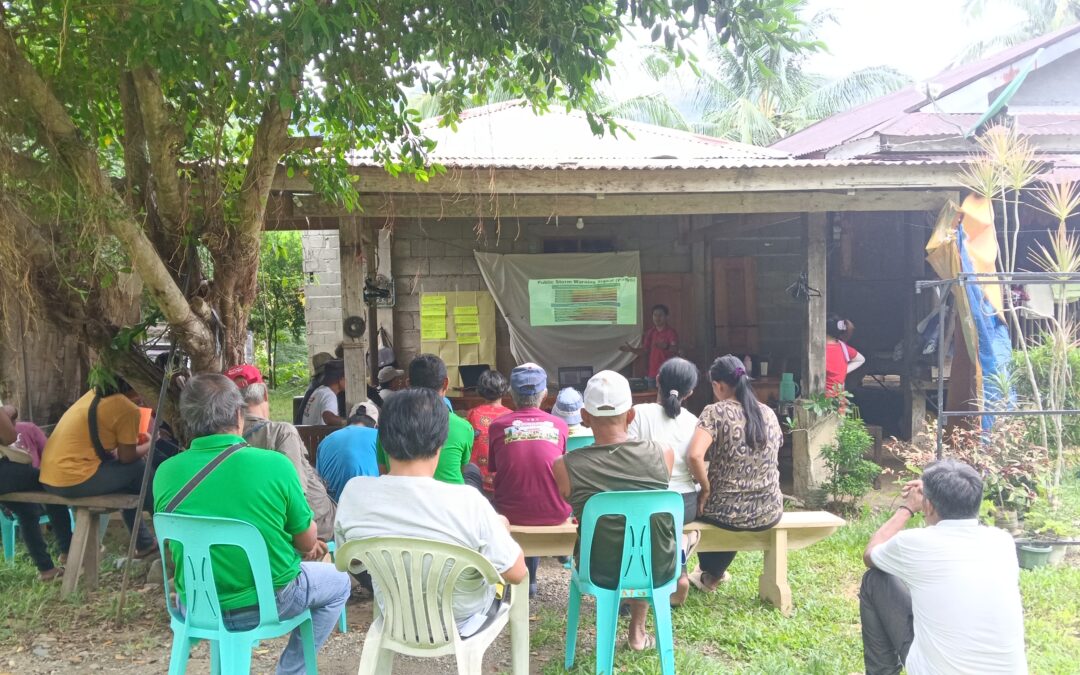
CorDisRDS conducted a two-day Disaster Preparedness Training with AFKA members. It also included other interested community members and Barangay Health Workers. Representatives from the Barangay Council attended as well. The training is part of the ongoing Community-Based Disaster Risk Management course and followed the community’s earlier Community Risk Assessment. Its goal was to strengthen local knowledge and skills in preparing for and responding to disasters. Thirty-five participants attended the first day, and forty joined on the second day.
The training opened with a review of the Community Risk Assessment results and a discussion of basic disaster concepts. Day one covered Early Warning Systems, risk ranking, worst-case scenario planning, Community-Based Early Warning Systems, and evacuation planning. These sessions helped participants identify hazards affecting their community and plan actions before, during, and after a disaster.
Participants listen attentively and take notes during the training session.
Early Warning Systems
In the Early Warning Systems session, participants shared indigenous knowledge and local observations they use to anticipate weather changes. These observations include changes in animal behavior, cloud formations, thunder, and insects. They help anticipate hazards and inform action. The discussion recognized the value of this local knowledge. It also stressed the importance of following official warnings from PAGASA, PHIVOLCS, and barangay officials. Participants discussed what makes a warning system effective. The system needs to be clear, timely, visible, and easy to understand. It uses distinct signals for hazards and has well-placed, maintained devices and responsible communicators.
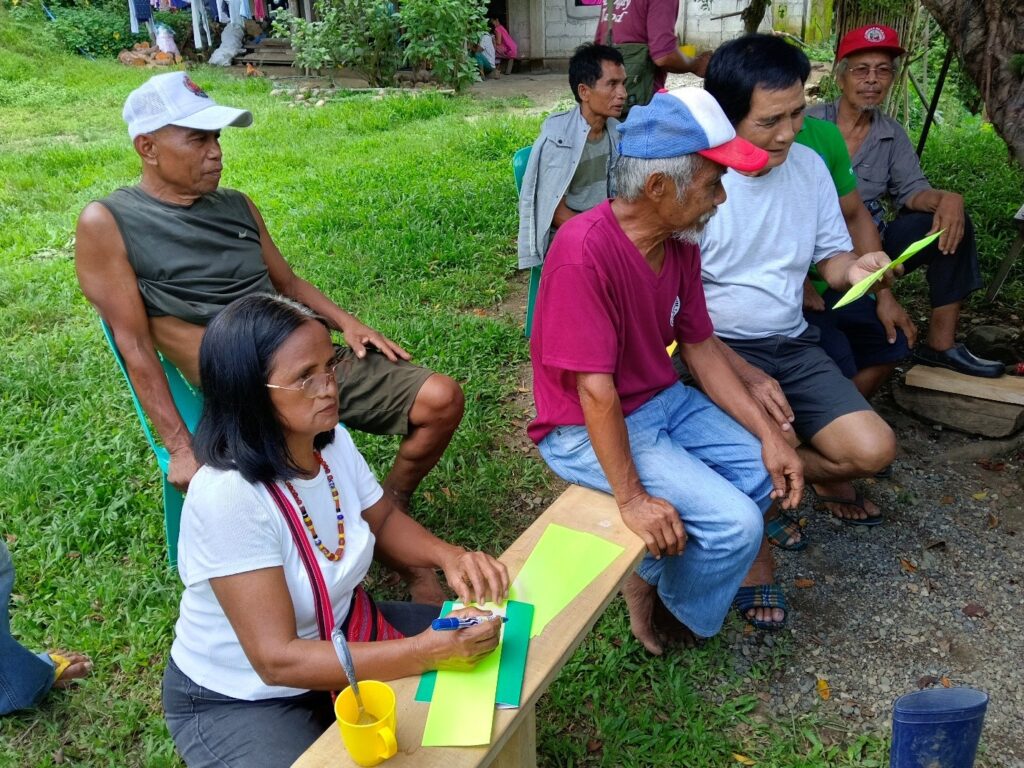
Participants form groups to discuss the workshop topics and work on their outputs, with support from CorDisRDS staff.
During the risk ranking workshop, participants assessed local hazards by likelihood and potential impact. Typhoon and landslide were identified as high-risk. Drought, La Niña, and pests were ranked medium-risk, and diseases were ranked low-risk. Participants noted that drought occurs yearly in the community. They also stated that heavy rainfall can trigger landslides affecting roads and rice fields.
Worst Case Scenario
Participants then built a worst-case scenario based on Typhoon Mina in 2011, the most severe typhoon the community has experienced. Participants imagined a Category 5 super typhoon lasting 48 hours. It threatened households, damaged crops and livestock, disrupted livelihoods, and raised health concerns. It also damaged infrastructure, interrupted classes, and left electricity, communications, water, and markets inaccessible. The exercise pushed participants to think beyond immediate effects. It also assessed how a major disaster affects various parts of community life.
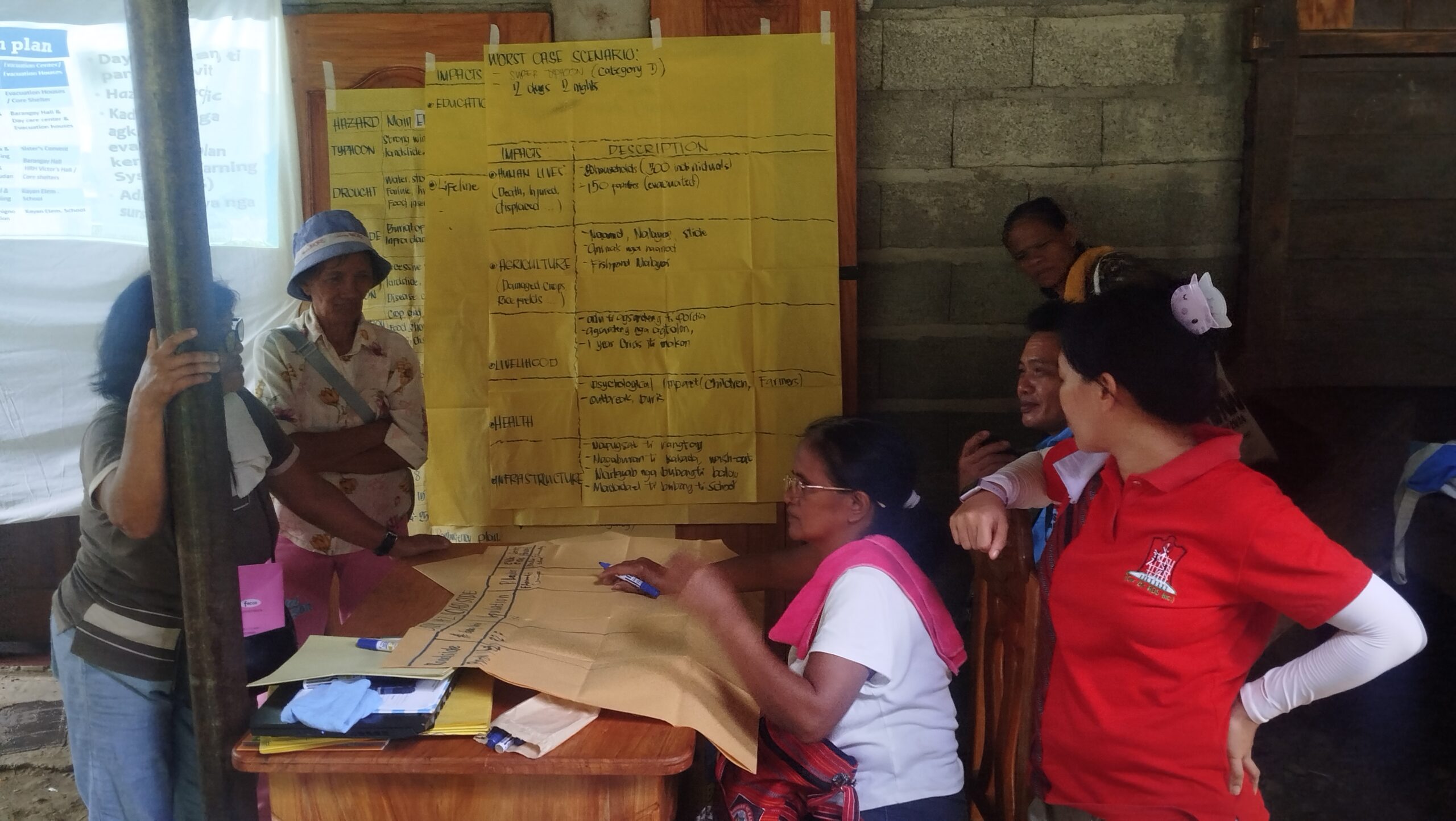
Participants form groups to discuss the workshop topics and work on their outputs, with support from CorDisRDS staff.
The Community-Based Early Warning System session turned these discussions into specific actions. Participants discussed preparing Go Bags with essential items. They include flashlights, ready-to-eat food, important documents, water, a first-aid kit, cash, clothing, batteries, and a radio. The community also developed its own warning signals, “READY,” “GET SET,” “GO,” and “STAND DOWN,” corresponding to different stages of a typhoon and the actions expected at each stage.
Evacuation
Evacuation planning was another major part of the training. Participants discussed types of evacuation and the qualities of a good evacuation center, including accessibility and considerations for children and persons with disabilities. They also agreed that families should be allowed to bring animals during evacuation, given their role in household livelihoods. Working in groups, participants identified population clusters, estimated numbers of evacuees, cluster leaders, and possible evacuation centers or safe houses.
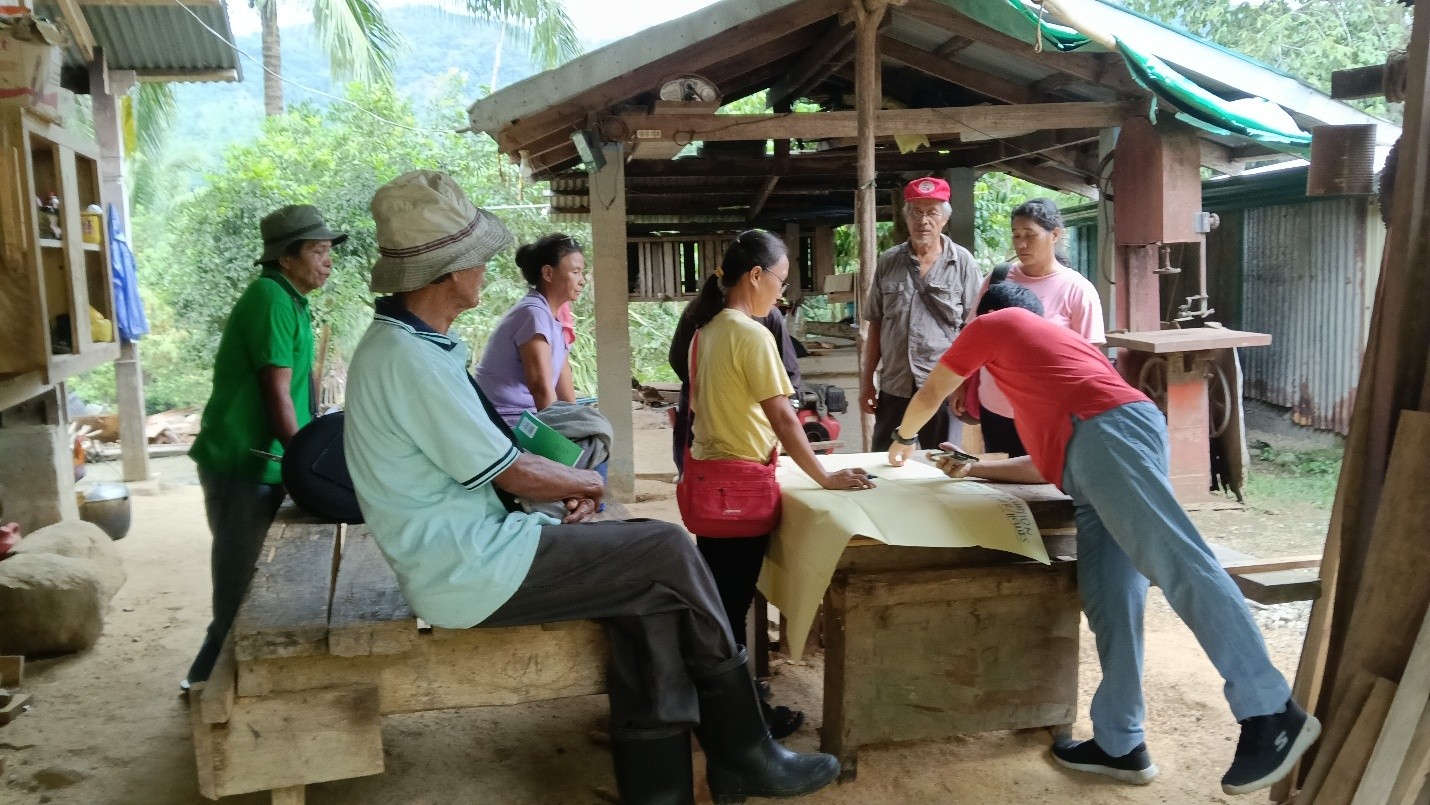
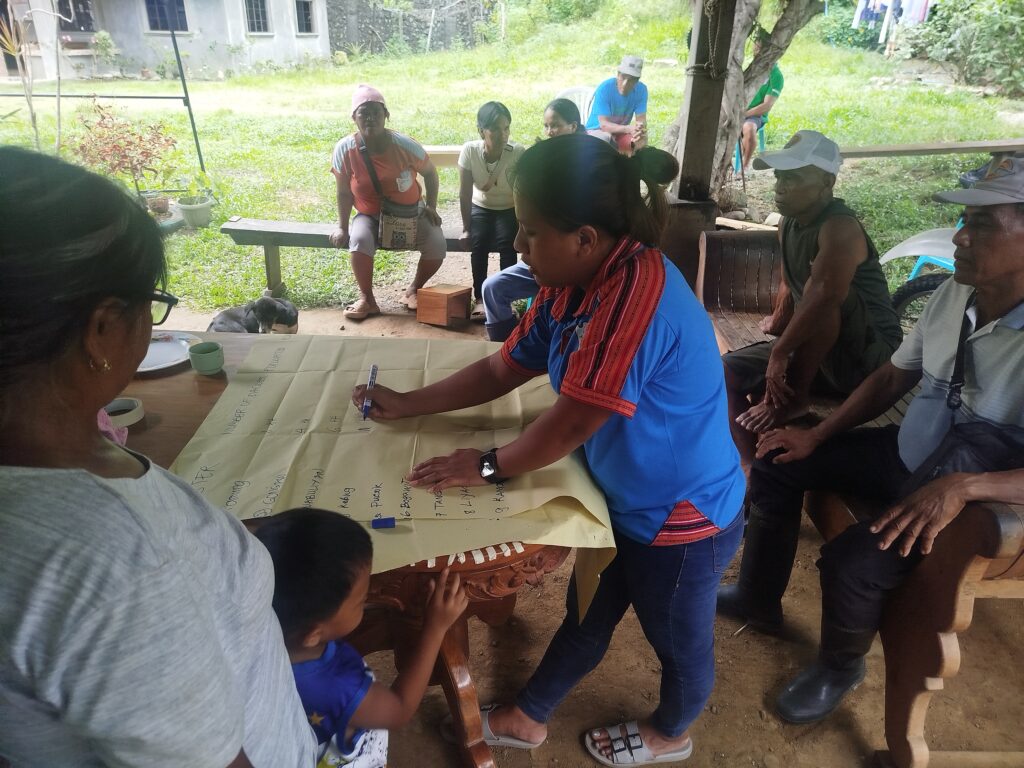
CorDisRDS assists the Purok 4 group in developing their evacuation plan, emphasizing the need for an assembly point due to the distance between households.
On the second day, participants reviewed key learnings from day one before moving into new topics. A Disaster Preparedness Committee was established within AFKA, with designated representatives for different puroks and areas. The committee will help monitor weather forecasts and disaster advisories, document hazard impacts, and prepare situational reports to support timely disaster reporting.
DNCA
The training also introduced the Damage, Needs, and Capacities Assessment, a tool used to monitor communities affected by hazards, along with alternative assessment approaches. Participants also conducted a Capacities and Vulnerabilities Assessment to complete the community’s risk and area profile. Through group discussions, they identified existing capacities and vulnerabilities related to livelihoods, resources, infrastructure, population, environment, disaster preparedness, services, leadership, community organization, participation, and social relationships.
Assessment
The assessment identified several community strengths, including farming knowledge, available natural resources, functioning schools and health services, active participation in capacity-building activities, community cooperation, and the continuing practice of innabuyog and other forms of mutual assistance. It also identified challenges such as frequent drought, lack of irrigation, limited rescue equipment, communication gaps during hazards, houses located in landslide-prone areas, and the need to strengthen participation and organizational capacities.
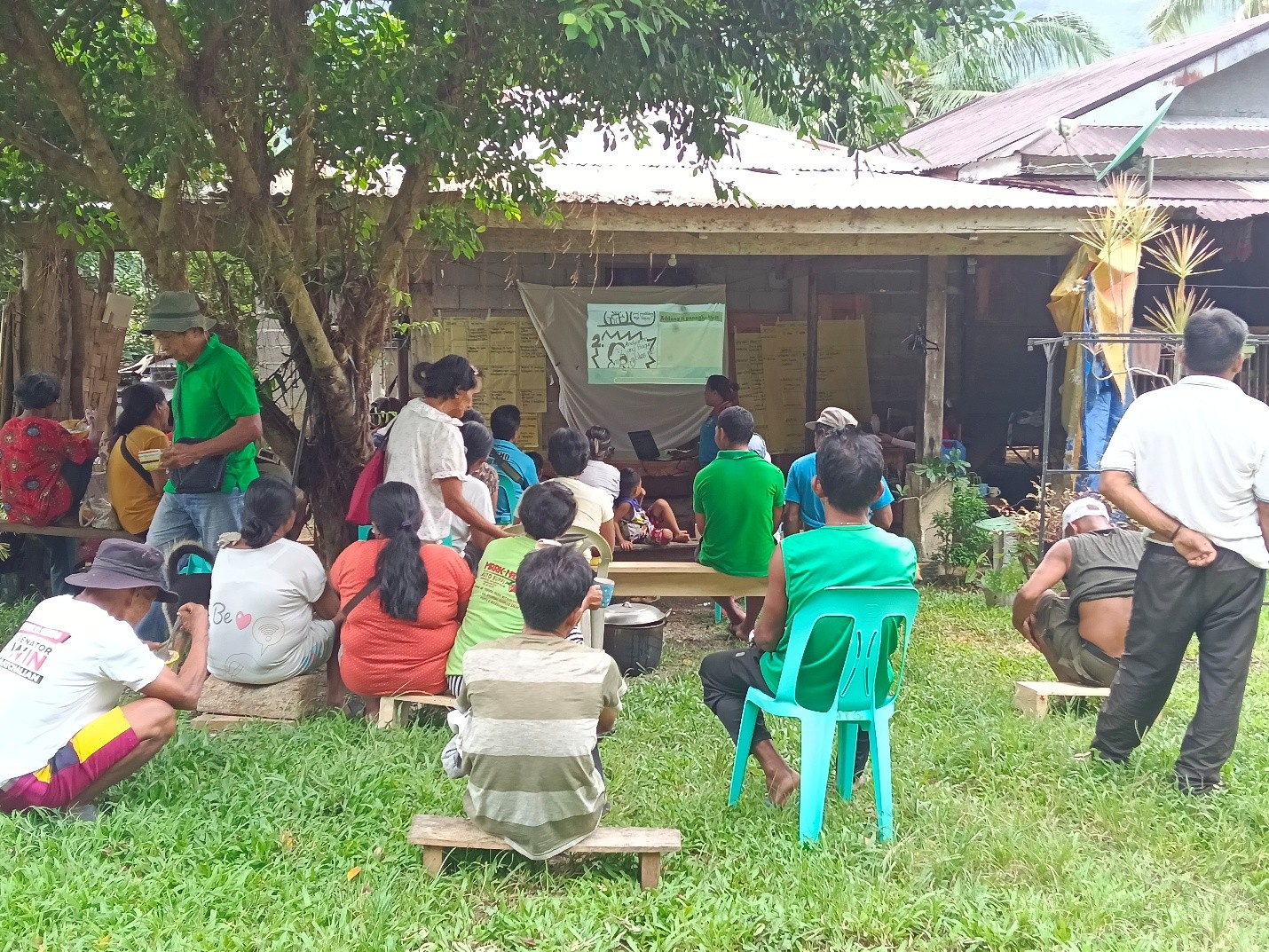
Participants discuss reconstructive evacuation, drawing on a community experience of moving away from an area at risk of landslides.
The discussions emphasized that disaster preparedness is not only about responding once a disaster occurs, but also about strengthening relationships, local knowledge, community organization, and preparedness actions beforehand. Participants identified bayanihan, cooperation among neighbors, voluntary assistance, and shared responsibility as key community capacities that support families during emergencies.
During the closing assessment and feedback session, participants said they gained significant learning from the training and thanked the CorDisRDS staff for sharing their knowledge and insights. One participant highlighted learning about the different types of evacuation and appropriate procedures for different situations, and recommended more training sessions to build additional knowledge and skills within the community.
DPT
The Disaster Preparedness Training reflects CorDisRDS’s continuing work to strengthen community-based disaster risk reduction by building local knowledge, improving preparedness systems, and supporting communities in identifying their own capacities and vulnerabilities. By combining formal disaster preparedness practices with indigenous knowledge, community experience, and collective action, the training contributes to a more organized and prepared community capable of taking appropriate action when disasters occur.