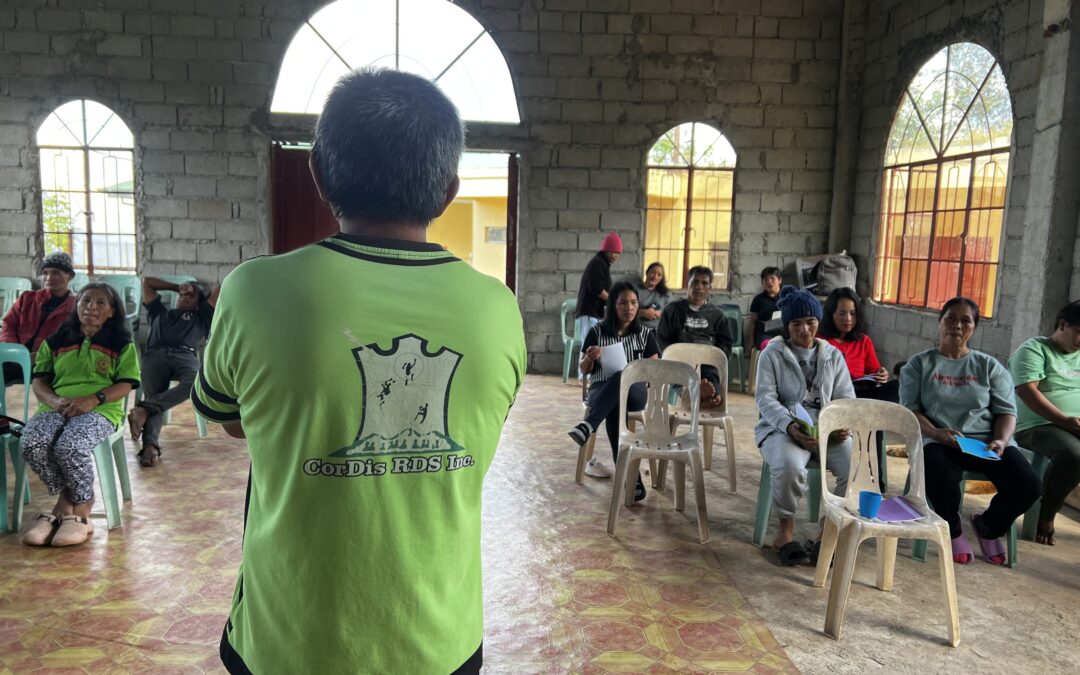
CorDisRDS, in partnership with the Madange Farmers Association, conducted a two-day CBDRM Training. The CBDRM session introduced DRRM concepts to residents and prepared them for disaster events. Participants learned to respond to emergencies and rebuild after crises. Through discussions, workshops, and a community risk assessment, participants examined hazards affecting their community. They also identified the strengths they already have for preparedness.
Learning from community experiences
The training started from what participants have lived through. They recalled Typhoon Ompong, the 1990 and 2023 earthquakes, prolonged rainfall, drought, disease outbreaks, pest infestations, and periods of conflict. Displacement followed these events. They discussed how these events affected homes, farms, roads, water sources, health, and livelihoods. They described how they coped at the time.
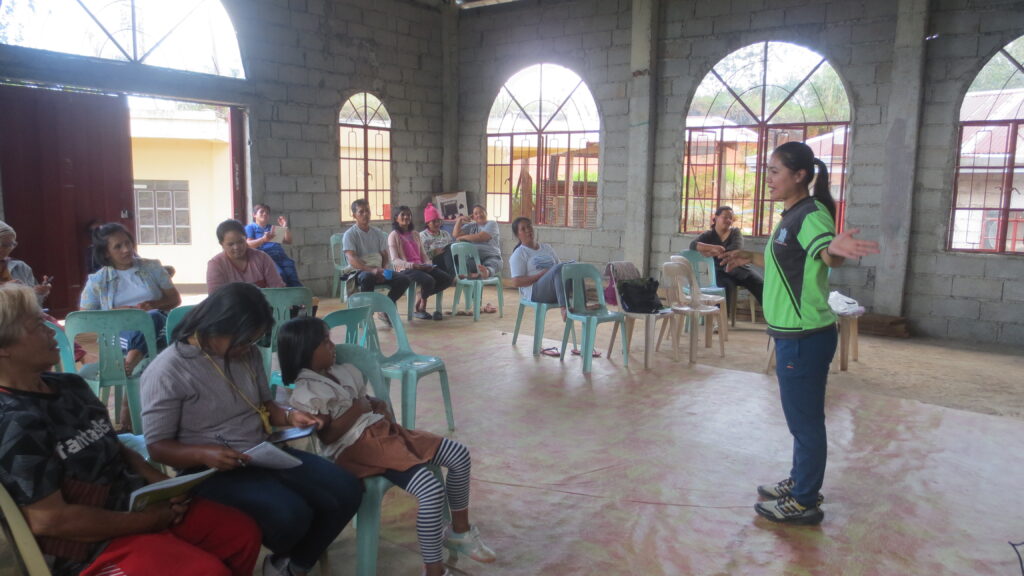
A CorDisRDS staff member explains key concepts while participants listen attentively.
The sessions showed why it matters to document local disaster experiences, since these can guide future preparedness planning. Participants discussed their role in monitoring and reporting damages. They explained that proper response and assistance require timely, accurate, and well-documented information.
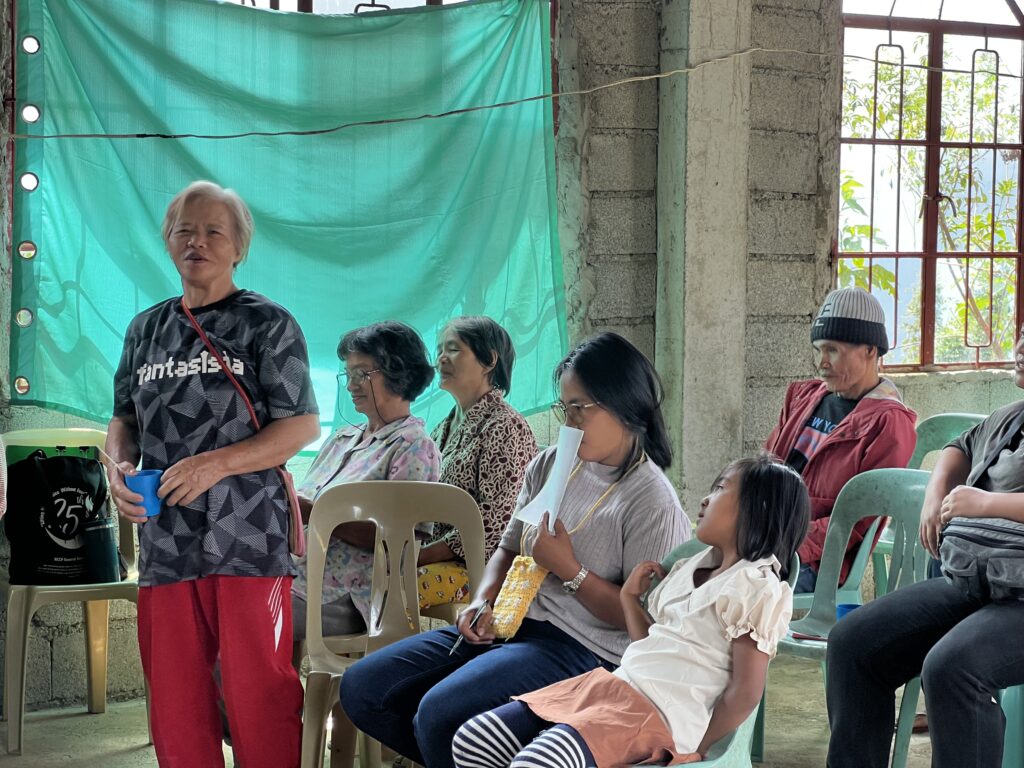
A participant shares insights and personal experiences during the community-based disaster risk management training.
Disaster risks, climate change, and agriculture
Participants discussed the connections between disaster risks, climate change, and farming. They raised concerns about shrinking water sources and changing weather patterns and how these affect agriculture. The participants discussed practical adaptation measures, including proper waste segregation, composting biodegradable waste, and not burning plastics. A session on ecosystem management and restoration encouraged participants to think about sustainable ways to protect their agricultural resources.
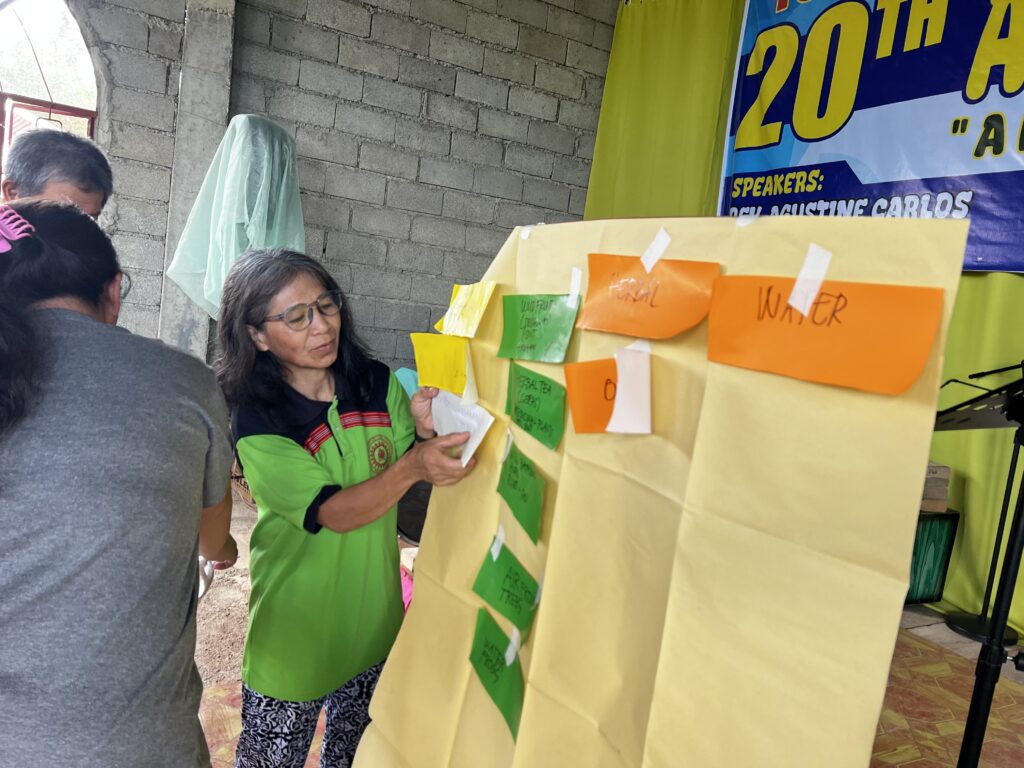
Participants actively engage in interactive workshops during the training.
The discussion on integrated pest management covered identifying pests correctly before applying any control, consulting agricultural technicians, looking at alternatives to chemical pesticides, and tapping available government agricultural programs.
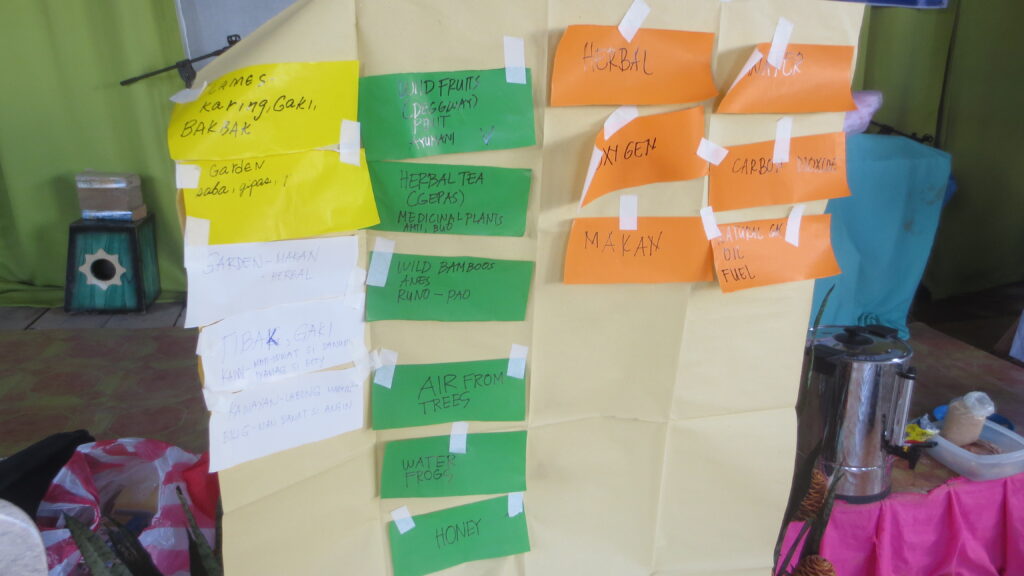
Participants present the workshop results, identifying available community resources and capacities that can support disaster preparedness and response.
Community risk mapping
A main part of the training was the Community Risk Assessment (CRA). Participants identified past hazards, affected areas, vulnerabilities, evacuation experiences, and existing community capacities. Participants presented and validated the results through the Community Risk Map, marking high and medium risk areas and discussing how landslides, ground cracks, and rainfall-related erosion could affect homes, farmland, roads, and pathways.
The assessment found Geday is high risk due to landslide concerns and a suspected underground hazard that could affect houses. Areas with existing cracks, and roads and pathways prone to erosion, mud, and difficult passage during heavy rain, were also flagged for attention. Participants recommended using clear color coding to separate high, medium, and low risk areas on the map. The map provides a basis for identifying areas that may require closer monitoring.
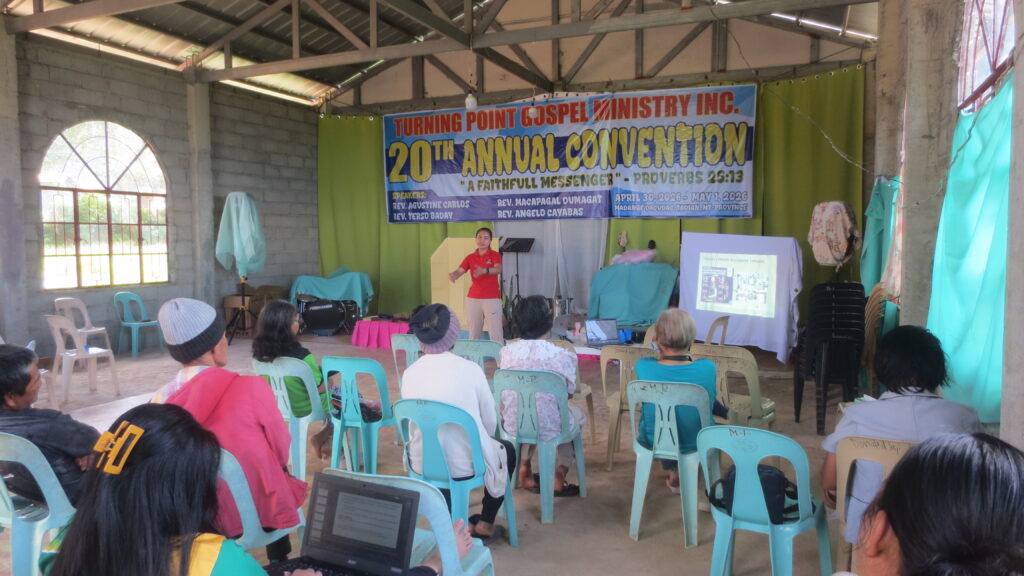
A CorDisRDS staff member explains key concepts while participants listen attentively during the community-based disaster risk management training.
The training also covered the legal basis of DRRM and the Barangay Disaster Risk Reduction and Management (BDRRM) Fund. Participants asked about the proper use of public funds and the handling and distribution of relief goods and government-provided farm inputs, which gave everyone a chance to clarify how assistance and resources are managed.
Following the training, there was a post-test and an assessment to review learning and collect feedback. Participants were also told about the next activity, a Disaster Preparedness Training, which will focus on practical skills for preparing for and responding to emergencies.
Additionally, the training reinforced that disaster risk reduction is a shared responsibility. Local authorities and response organizations have important roles, but communities also need to take part in identifying hazards, documenting impacts, protecting livelihoods, and building local capacity. Through its partnership with the Madange Farmers Association, CorDisRDS continues to support community-based approaches that value local knowledge and collective action.