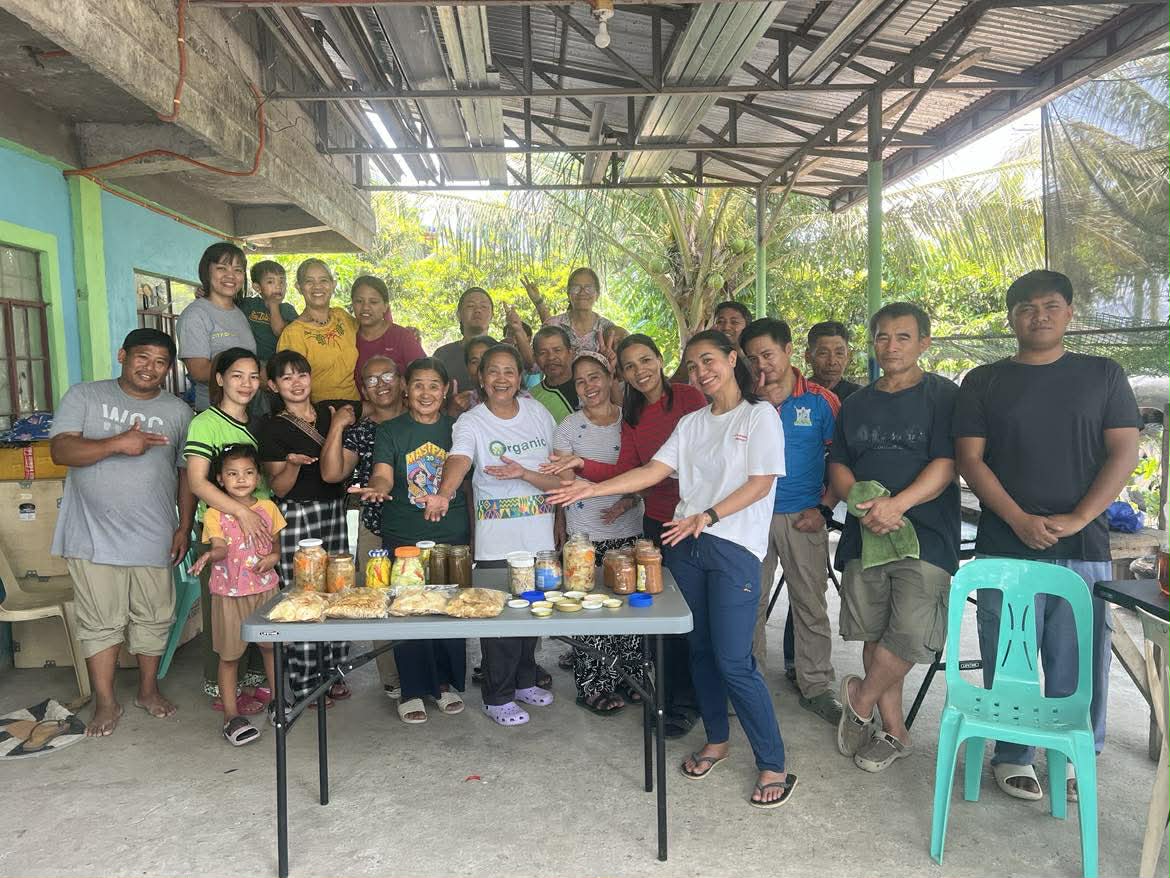
From April 7–9, 2026, the Cordillera Disaster Response and Development Services (CorDisRDS), in partnership with the Center for Development Programs in the Cordillera (CDPC) and the Magsasaka at Siyentipiko para sa Pag-unlad ng Agrikultura (MASIPAG), successfully conducted a Food and Feed Processing Training at the Lacnog Demonstration Farm in Tabuk City, Kalinga.
More importantly, the training was designed as a Training of Trainers (ToT) aimed at equipping participants with the knowledge, skills, and confidence to become resource persons who can replicate similar trainings in their respective partner communities.
A CorDisRDS representative provides an overview of the training’s background, rationale, and objectives, setting the direction for the activity.
Building a Pool of Community Trainers
Beyond technical learning, the training focused on preparing participants to facilitate similar activities in the future. Participants were encouraged not only to learn the processes themselves, but also to understand how to effectively teach and share them with others.
Through this approach, CorDisRDS and its partners aim to develop a pool of community-based trainers, ensure that knowledge is multiplied and sustained, and respond to requests from partner communities for similar capacity-building initiatives.
Strengthening Local Knowledge and Skills
The training enhanced participants’ existing knowledge and helped transform traditional practices into more systematic and sustainable approaches. Participants expressed strong interest in processing surplus agricultural products, developing alternative feeds using locally available materials, and sharing these learnings with their communities and partner organizations.
A resource person from MASIPAG highlights the importance of food processing and proper storage in ensuring food quality and sustainability.
The activity also emphasized that many communities already have valuable traditional knowledge in food preservation and processing. The training helped build on these experiences by introducing improved methods, additional products, and practical techniques that participants can replicate and teach.
Learning Through Hands-On Practice
A key highlight of the training was the hands-on practicum, where participants were directly involved in processing a variety of products, including:
- Papaya Atchara
- Banana Chips
- Ginger Candy
- Taro Chips
- Mango Jam
- Banana Ketchup
- Sayote Atchara
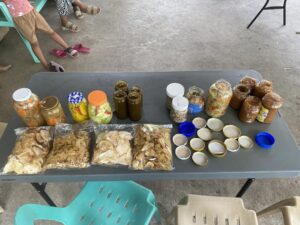
Processed food products prepared by participants during the training.
Participants also discussed fermentation techniques such as buro and explored possible processing methods for other local products such as kalamansi, santol, coconut, and pineapple.
The practicum gave participants the opportunity to apply the lessons immediately, helping strengthen both their technical knowledge and their confidence in demonstrating these processes to others.
Promoting Organic and Sustainable Practices
The training also highlighted the importance of organic food and feed processing, encouraging participants to maximize natural and locally available resources instead of relying heavily on commercial inputs.
During the feed processing sessions, participants learned to prepare alternative feeds for pigs and chickens using ingredients such as kangkong, rice bran, saba, molasses, and sapal. It was emphasized that organic feed production can help reduce feeding costs while promoting more sustainable farming practices.
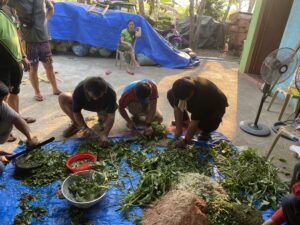
Participants chop kangkong leaves as part of the biofeeds preparation during the practicum.
The sessions further underscored the importance of proper hygiene, sanitation, careful preparation, and the gradual introduction of new feeds to animals.
Key Insights for Future Training Replication
As a Training of Trainers, the activity also surfaced important insights for improving future training rollouts. Among the key recommendations raised were the need for clearer modules and handouts, better preparation and coordination, improved presentation of measurements and procedures, and a stronger balance between lecture and actual demonstration.
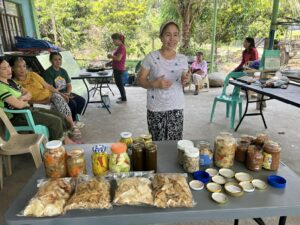
A resource person encourages participants to apply their learnings and share them with their families and partner communities.
These insights are important in strengthening future efforts, especially as participants are expected to eventually serve as trainers and facilitators in their own communities.
Participant Reflections
The impact of the training was reflected in participants’ shared experiences:
- The hands-on practicum made the learning more meaningful and helped participants better understand the processes, increasing their confidence to eventually teach others.
- The training opened opportunities for income generation, especially by processing surplus fruits and local products that would otherwise go to waste.
- Participants gained a deeper appreciation of maximizing locally available resources, particularly in food and feed preparation for livestock.
- The training strengthened participants’ readiness to share knowledge with their communities and respond to requests for similar trainings in the future.
Moving Forward: From Learners to Trainers
The training concluded with the awarding of certificates and tokens to participants and resource persons in recognition of their active participation and contribution to the success of the activity.
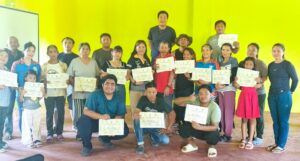
Participants pose with their certificates after successfully completing the three-day training.
In the closing message, participants were encouraged to apply what they had learned, share their knowledge with fellow farmers and communities, and continue promoting organic and sustainable practices.
With the ToT approach, the participants are now expected to take on a more active role not only as learners, but also as future trainers who can support partner communities through similar learning activities.
Empowering Communities Through Shared Knowledge
The Food and Feed Processing Training reflects the continuing commitment of CorDisRDS and its partners to build resilient and self-reliant communities through capacity development.
By developing a pool of trained individuals who can eventually serve as resource persons, the initiative helps ensure that knowledge continues to spread and create impact beyond the three-day training itself.