
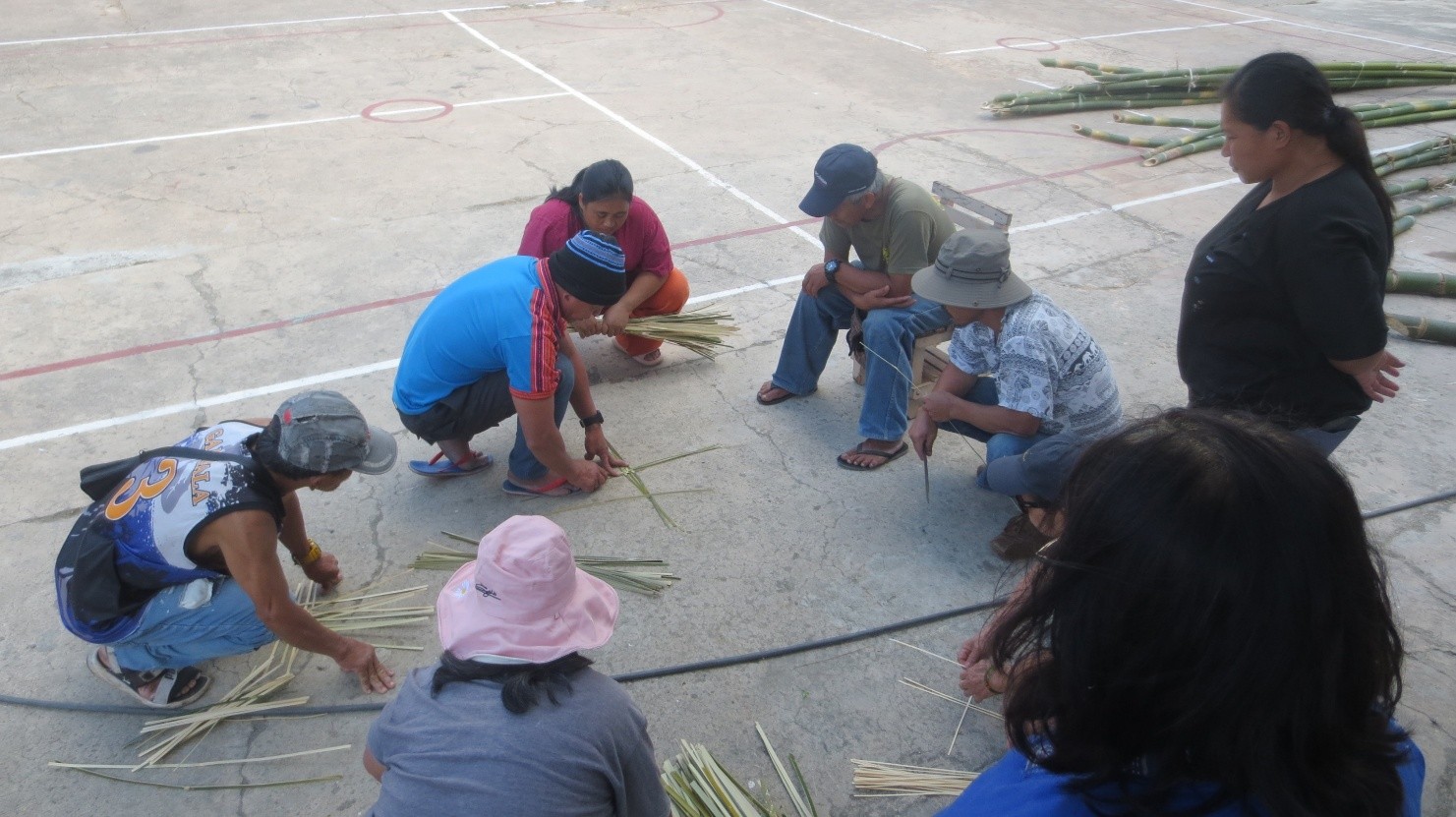
Hands-on demonstration of basket weaving techniques
Kayan East, Tadian, Mountain Province, February 12, 13, 2026. For two days, members of the Kayan Unity for Development Organization (KUDO), together with students and facilitators from the Cordillera Disaster Response and Development Services (CorDisRDS), gathered not only to learn basket weaving, but to reconnect with a skill deeply rooted in their daily lives as farmers.
A Skill Once Common, Now Learned Again
In the past, making tools like ligao, labba, akiyak, and balinag was part of everyday life in the community. These bamboo-crafted items were essential in farming and household activities. But over time, many began to buy these tools in stores, and the knowledge of weaving slowly became less practiced.
Recognizing this, KUDO initiated a two-day basket-weaving training to bring the skill back into the hands of the community.
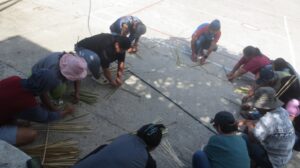
Students from Holy Rosary High School prepare bamboo materials for kig-it, egtap, and kayas
Learning Through Hands and Experience
The training brought together 27 participants, KUDO members, Grade 12 students from Holy Rosary High School, farmers, and community members, each with different levels of familiarity with basket-weaving.
On the first day, participants began with the basics, preparing the bamboo. They learned processes locally known as kig-it, gig-e, egtap, and kayas, steps that require patience and careful handling of the material.
Preparation of materials for the basket weaving demonstration
While some worked on splitting and cleaning bamboo strips, others went out to nearby areas to gather additional bamboo, ensuring that there would be enough materials for everyone.
What seemed simple at first quickly revealed its challenges.
“Kanan tako no nalaka ngem baken ubpay,” one participant reflected, what seemed easy was not easy at all.
Weaving More Than Materials
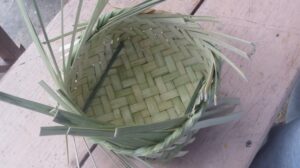
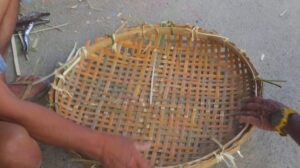
By the second day, the focus shifted to actual weaving. Guided by facilitators from CorDisRDS and KUDO, participants began crafting their own akiyak, a tool used to separate grains from dried leaves, and balinag, a versatile basket tray.
The process required focus, coordination, and patience. Some participants needed one-on-one guidance, while others slowly found their rhythm.
Step-by-step demonstration of basket weaving techniques
By the end of the training, most were able to complete their own baskets, while a few were still in the process, hands still learning, skills still forming. Yet, completion was not the only measure of success.
More Than a Training
For many, the activity became more than just learning how to weave, it became a reminder of what the community already has.
Participants shared that one of the key challenges was the lack of prepared materials. They suggested that future trainings ensure bamboo is ready beforehand, so more time can be spent weaving and improving their skills.
But even with this challenge, the impact was clear.
After the training, some KUDO members immediately began searching for suitable bamboo, continuing the process of kayas on their own. The interest did not end when the activity ended, it carried on within the community.
Keeping the Tradition Alive
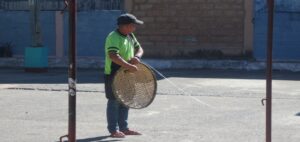
The objective of producing finished products for display during the “Ayyoweng di Lambak ed Tadian” may not have been fully achieved, but something more important took place.
The training sparked renewed interest, especially among younger participants, and strengthened the community’s connection to their indigenous practices.
More importantly, it showed that traditional knowledge, like basket weaving, does not disappear. It only waits to be practiced again.
As the participants continue to learn and improve, the hope is that these woven products will not only serve their daily needs but also stand as a reflection of their culture, resilience, and creativity.