
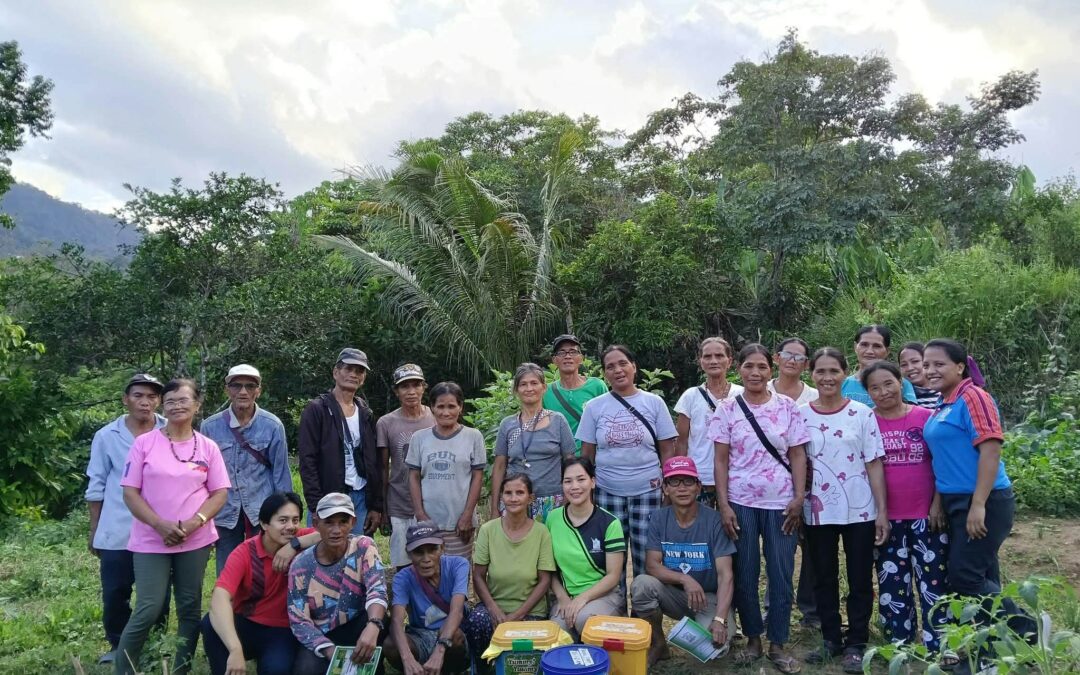
LUTAB, Pinukpuk, Kalinga hosted the event on November 14, 2026. Members of the LFA gathered to emphasize healthy soil and sustainable farming practices. They attended a Sustainable Agriculture Orientation and Soil Management Training to strengthen knowledge and practical skills.
The activity was organized in response to the learning needs identified by the members themselves during their General Assembly. Participants engaged in learning sessions, experience-sharing, and hands-on activities. They explored practical approaches to maintaining soil fertility. Locally available materials supported organic farm inputs.
The initiative highlights the importance of sustainable agriculture in strengthening local farming systems, promoting responsible resource management, and supporting the long-term productivity of agricultural communities
Understanding Sustainable Agriculture and Healthy Soil Management
The training opened with an orientation on sustainable agriculture. It introduced participants to its principles. It highlighted the importance of farming practices that promote environmental sustainability and responsible management of agricultural resources.
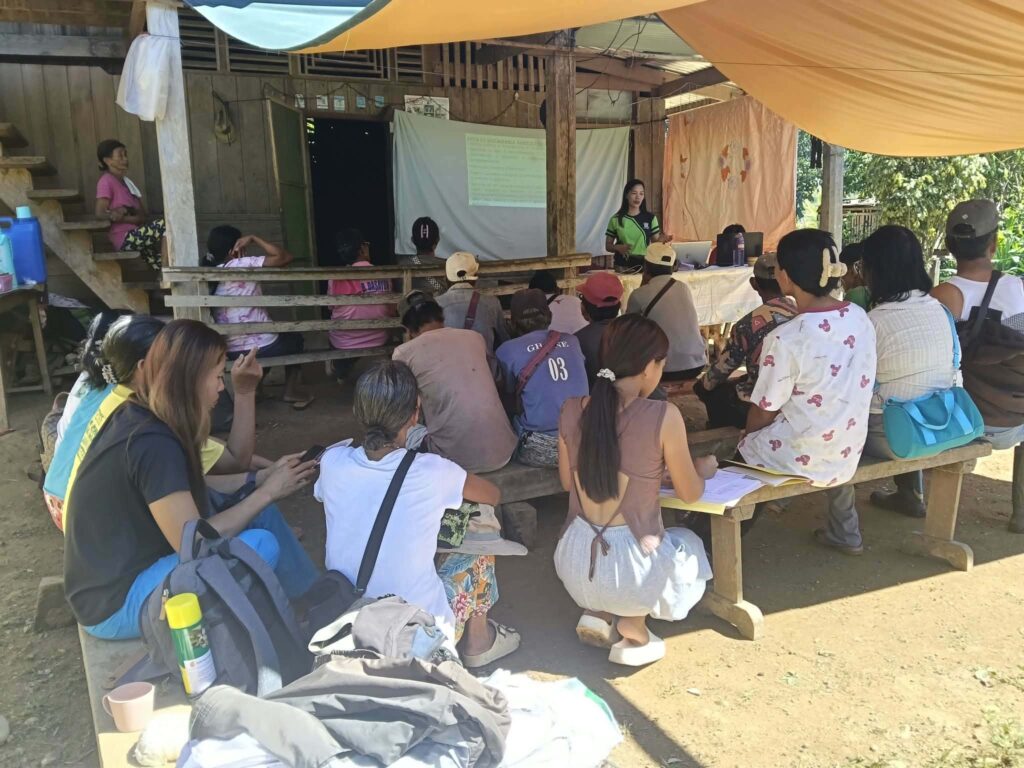
Participants listen and engage during a discussion on sustainable agriculture, exploring practical approaches to improving farming practices and managing agricultural resources responsibly.
The discussion provided an opportunity for farmers to relate the concepts to their own experiences. One participant described the emergence of unfamiliar, difficult-to-remove weeds. This followed the use of an agricultural chemical locally known as “Spit Fire.” This experience prompted further reflection on the importance of understanding the possible effects of agricultural inputs on farming systems.
A discussion on soil management followed the session. It focused on the characteristics of soil and the importance of maintaining its fertility. These practices form part of sustainable agriculture, emphasizing the importance of protecting soil health and making better use of available organic resources.
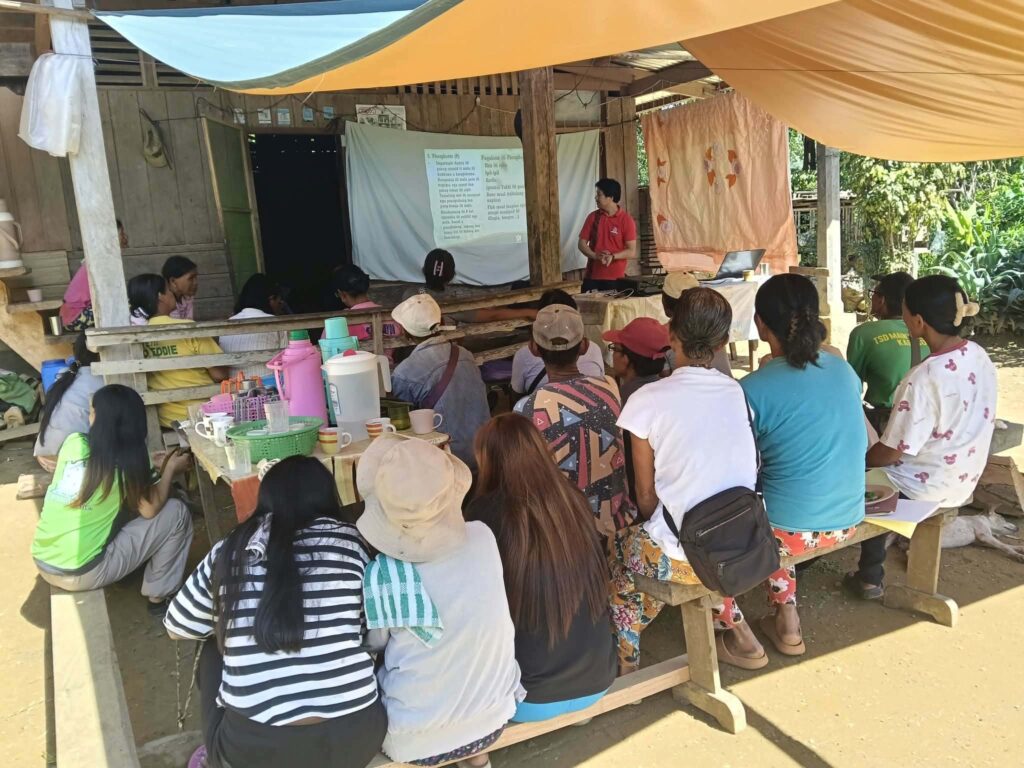
LFA members participate in a discussion on soil management, exploring soil characteristics, the importance of maintaining soil fertility, and practical ways to improve the use of organic materials in their farms.
Farmers also shared their existing practices in managing agricultural residues. Some participants return rice straw to fields after harvest to improve soil health as organic material. Others report discarding weeds and vegetation from cleaning by burning. These exchanges opened discussions on utilizing organic farm residues to support soil health. The goal is to improve farming practices.
Promoting Sustainable Agriculture Through Organic Farm Inputs
Beyond the discussions, the training introduced participants to the preparation of three organic farm inputs. These inputs are Indigenous Microorganisms (IMO), and Fermented Plant Juice (FPJ). They cover their preparation and use in farming.
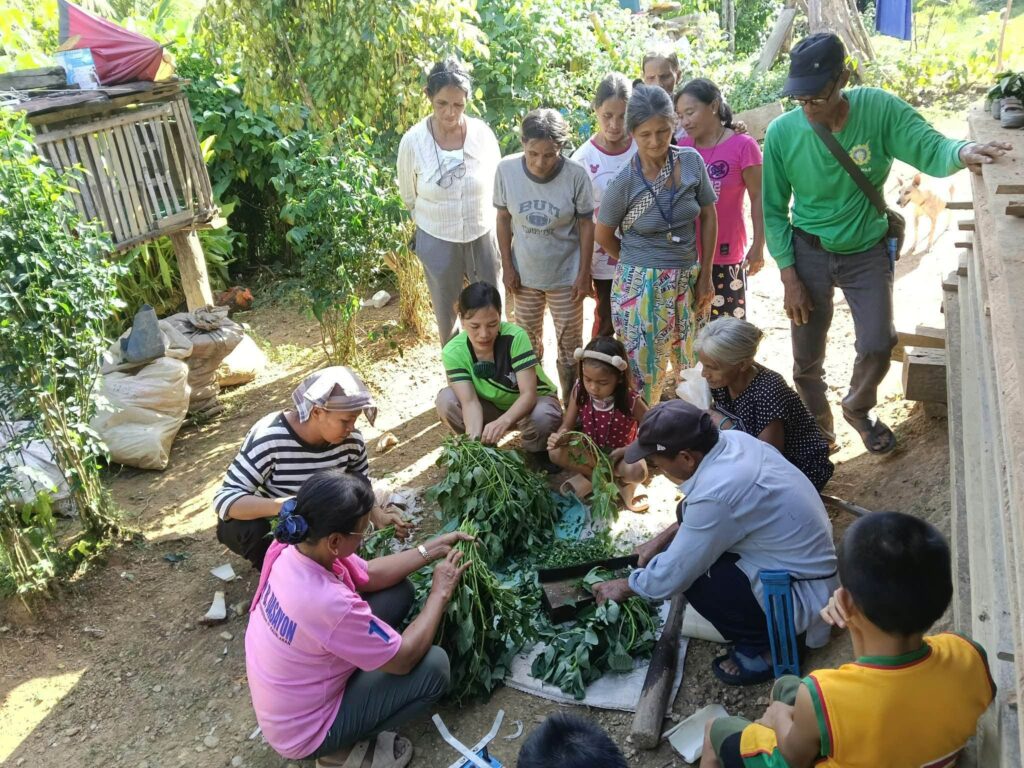
LFA members work together in preparing and processing plant materials for organic farm inputs during the hands-on practicum of the sustainable agriculture training.
Participants were provided with practical information on preparing and using these organic inputs. They raised questions about their preparation. They asked about storage. Their discussion of shelf life highlighted their interest in applying the techniques on their respective farms.
The discussions were followed by a hands-on practicum in the afternoon. Participants worked with locally available materials, including kangkong, camote tops, saba, and rice. They used these materials for the preparation of organic farm inputs.
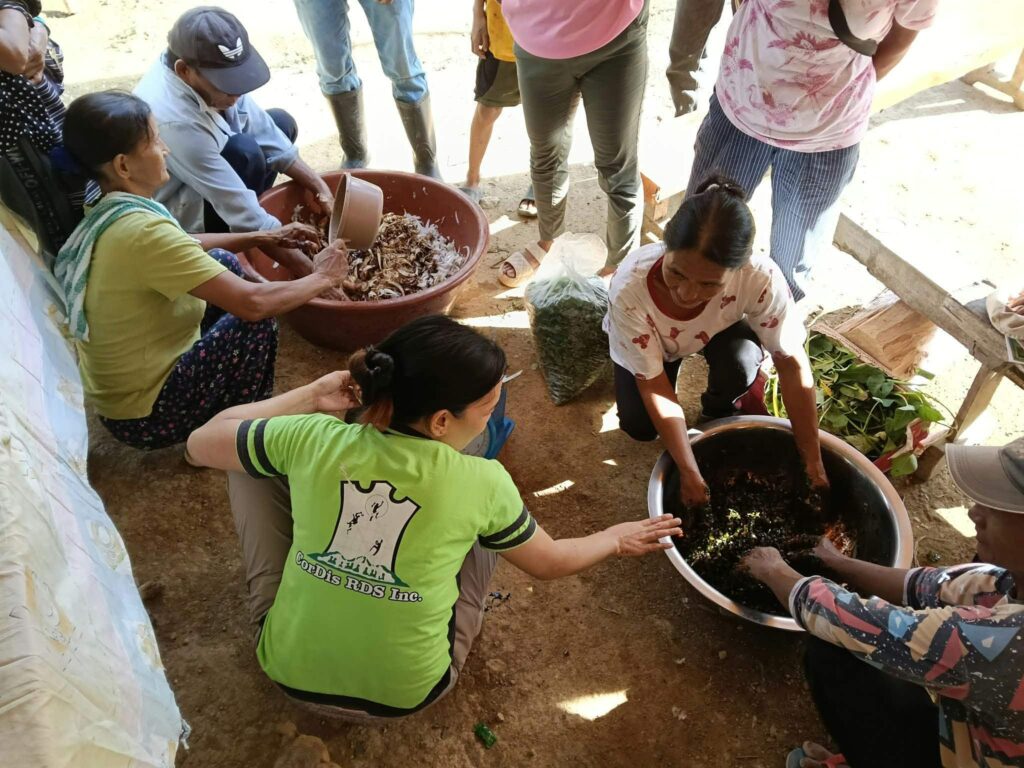
Participants work together in processing and mixing organic materials as part of the hands-on demonstration on preparing organic farm inputs.
Through the practical activity, participants were able to connect the concepts discussed during the orientation with actual preparation processes. It also demonstrated how materials readily available in their community can be utilized in producing organic agricultural inputs.
Strengthening Community Participation in Sustainable Agriculture
The activity gave LFA members a chance to revisit their organizational plans. They could identify priority activities and assign responsibilities for their implementation.
Among the commitments discussed were the preparation of organic inputs and their harvesting. They included the collection of membership fees and annual dues, and preparations for the organization’s proposed leadership training. Members also discussed their upcoming DOLE accreditation and participation in other community and organizational activities.
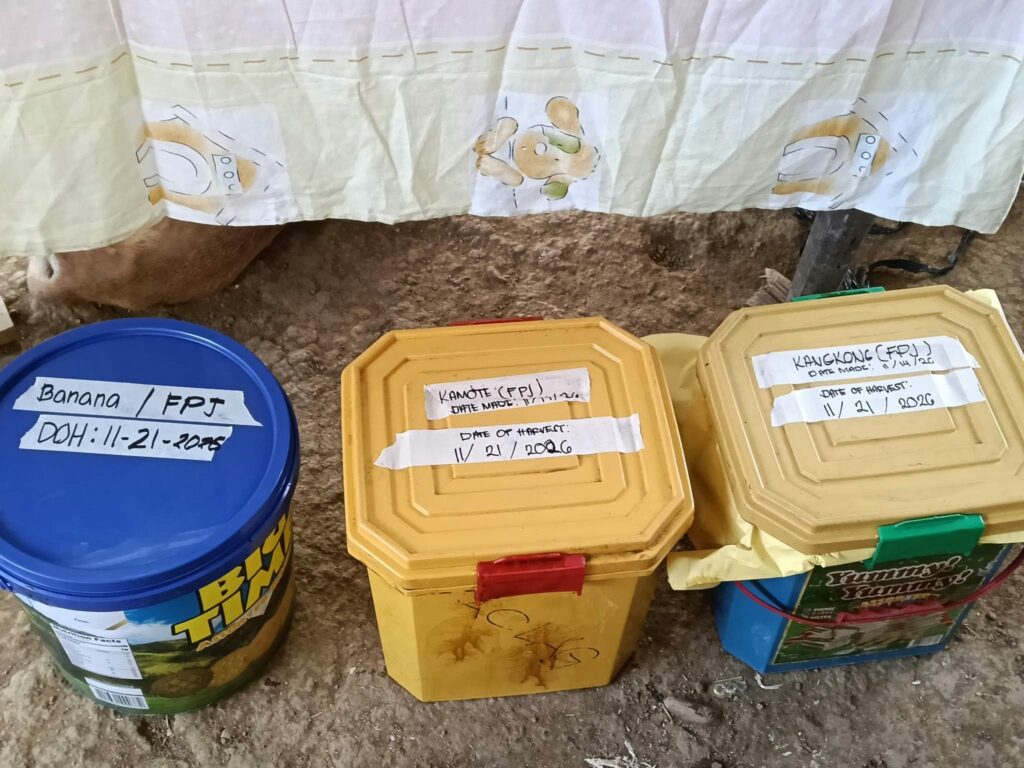
Prepared containers of Fermented Plant Juice (FPJ) from banana, camote tops, and kangkong, showcasing the use of locally available plant materials in producing organic farm inputs.
Aside these immediate commitments, participants raised broader community development concerns, including the possibility of exploring support for irrigation improvements. Participants emphasized strengthening coordination with the Barangay Council. They also urged more young people to participate in agricultural and organizational activities.
These discussions showed that strengthening sustainable agriculture requires more than technical knowledge. It also needs active community participation, organizational development, and collective planning.
Learning from Farmers’ Experiences and Looking Ahead
During the assessment, participants expressed appreciation for the knowledge and practical skills gained from the training. During the assessment, participants appreciated the knowledge and practical skills from the training. Participants recognized the value of learning about soil management and organic farm inputs. Participants also offered recommendations to improve future capacity-building activities.
As suggested, participants could take home learning materials or reference kits. They could consult them when applying techniques on their farms. They also emphasized the need for earlier activity announcements, improved coordination despite limited communication signals in the area, and greater participation from younger community members.
The participants’ feedback underscored the importance of providing continuous learning opportunities that respond to the actual needs and experiences of farming communities.
The Sustainable Agriculture Orientation and Soil Management Training demonstrated the value of community-driven capacity building, where farmers are not only recipients of information but active contributors to the learning process. By connecting technical discussions with local experiences and practical activities, the training encouraged participants to reflect on their existing practices and explore ways to strengthen their farming systems.
As LFA members move forward with their identified commitments, the activity serves as another step toward strengthening local capacities, promoting sustainable agricultural practices, and building more active and organized farming communities in Pinukpuk, Kalinga.